
Preventing Water Ingress in Commercial Buildings: A 2025 Risk Checklist
Water ingress is one of the most common, and costly, issues affecting commercial properties in the UK. From damp ceilings and ruined interiors to structural damage and health risks, unchecked ingress can quickly spiral into serious disruption and expense.
But most of these problems are preventable. With the right inspections, maintenance routines and awareness of common weak spots, facilities managers and property owners can safeguard their buildings year-round.
In this blog, we break down the key risk areas and give you a practical, easy-to-follow checklist to reduce your building’s vulnerability to water ingress in 2025 and beyond.
Why Water Ingress Happens
Water doesn’t need a big hole to cause big problems. It finds the smallest gaps, cracks or drainage failures, often where elements of a building meet or haven’t been maintained properly.
Typical causes include:
- Blocked or overflowing gutters
- Poor drainage design or capacity
- Failing roof membranes or coatings
- Cracked masonry or defective pointing
- Faulty windows, seals, or cladding interfaces
- Lack of expansion joint maintenance
Add in heavier, more unpredictable rainfall patterns, and the risk of failure rises sharply.
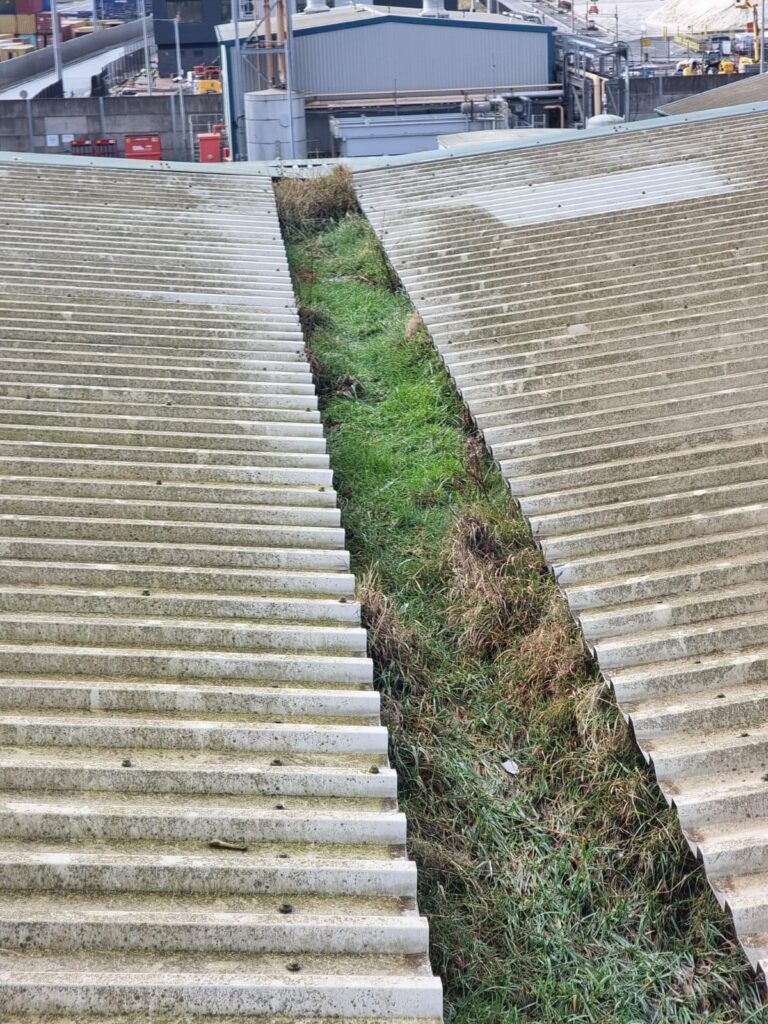
“Unchecked water ingress rarely stays small — it spreads silently, damaging structure, reputation, and the bottom line.”
2025 Water Ingress Prevention Checklist
Gutters and Downpipes
☐ Visually inspect for blockages, moss, or plant growth
☐ Clear debris at least twice per year (or more in tree-heavy areas)
☐ Check brackets and falls to ensure effective flow
☐ Confirm downpipes are connected and draining properly
Roofing Systems
☐ Inspect for blisters, cracks or surface ponding
☐ Check seams and joints for lifting or delamination
☐ Ensure coatings are intact and reflect water correctly
☐ Test all drainage outlets and overflows
Flat Roof Drainage
☐ Confirm siphonic or gravity systems are functioning
☐ Test secondary/overflow systems as per BS 8490:2025
☐ Ensure roof falls are compliant and directing water correctly
☐ Remove ponding or standing water immediately
Façades and Cladding
☐ Examine for cracking, spalling or signs of water staining
☐ Inspect window seals and joints for degradation
☐ Clean and maintain junction points (e.g. soffits, parapets)
Basements and Sub-Structure
☐ Check sump pumps and drainage channels
☐ Look for signs of moisture ingress at floor/wall joints
☐ Test waterproof membranes and tanking regularly
Internal Indicators
☐ Monitor ceiling tiles, light fittings, and internal walls for signs of damp or discolouration
☐ Investigate mould smells or increased humidity
☐ Use moisture meters in suspect areas
Fixings to Roof and Cladding Systems
☐ Check integrity of fixings, brackets and anchor points to ensure they remain secure
☐ Look for signs of corrosion, loosening, or movement around penetrations
☐ Ensure fixings are sealed properly to prevent water tracking into roof or wall systems
What to Do If You Spot a Risk
If you notice signs of water ingress, such as staining, damp, or ponding – act quickly. Early intervention can prevent costly repairs and operational disruption.
Document and Isolate
Take photos and note where and when the issue appeared. Try to identify the likely source: roof, gutter, façade, etc.
Call in a Specialist
A professional inspection can confirm the cause and assess whether wider system failures are present.
Make Immediate Repairs
Address the issue promptly. Whether clearing blocked outlets or reapplying sealants, don’t delay permanent fixes.
Review Maintenance Routines
One issue often reveals others. Use this as a prompt to revisit your inspection schedules and drainage strategy.


How RPMG Can Help
At RPMG, we offer tailored inspection, maintenance and waterproofing services for commercial and industrial buildings. Whether you need:
- Roof condition surveys
- Gutter system cleaning or replacement
- Drainage system compliance checks
- Liquid coating application or patch repairs
…our team has the tools and experience to keep your building protected.
📞 Need help identifying or addressing water ingress risks?
Get in touch to arrange a site visit or a preventative maintenance plan.