Gutter Compliance: What Facilities Managers Need to Know in 2025
In the world of facilities management, gutters rarely top the priority list, until something goes wrong. But failing to maintain and monitor your building’s gutter systems doesn’t just lead to water damage. In 2025, it can also mean compliance breaches, legal liability, and invalidated insurance.
Blocked or defective guttering is a leading cause of water ingress, damp, and structural deterioration in commercial buildings. It can create slip hazards, damage internal assets, and interrupt operations – all of which could have been prevented with a proactive approach to inspection and upkeep.
So what exactly does “gutter compliance” mean in practice, and what do facilities managers need to stay on top of this year?
Understanding the Legal Landscape
While there’s no single law that mandates how often you should clean your gutters, there are clear legal obligations under broader health and safety legislation. The Health and Safety at Work Act 1974 and the Workplace (Health, Safety and Welfare) Regulations 1992 require building owners and managers to maintain safe premises for workers and visitors alike. That includes managing rainwater effectively to prevent slips, trips, and internal hazards.
If poorly maintained gutters lead to injury or property damage, building managers may be held accountable, especially if they’ve failed to carry out reasonable inspections or repairs. It’s not just a maintenance issue. It’s a risk management one.
“If poorly maintained gutters lead to injury or property damage, building managers may be held accountable, especially if they’ve failed to carry out reasonable inspections or repairs.”
How Often Should Gutters Be Inspected?
There’s no universal rule, but a good benchmark is twice per year, ideally in spring and autumn. That said, buildings surrounded by trees, or those in areas of heavy rainfall, should be checked more frequently. After major storms or prolonged periods of bad weather, it’s also worth conducting a visual inspection to ensure no damage or blockages have occurred.
During inspections, the focus should be on identifying any signs of debris build-up, structural issues, or poor drainage flow. Blocked outlets, cracked joints, and overflowing rainwater are all red flags that the system isn’t working as it should.
Why Record Keeping Matters More Than Ever
Insurers and regulatory bodies are becoming increasingly focused on evidence of due diligence. It’s no longer enough to say you’ve maintained your building, you need to show it. Keeping clear records of inspections, servicing, and any repair work carried out on gutter systems is now a key part of compliance.
That might include simple logs, photos from inspections, contractor reports, and copies of maintenance schedules. Not only can this support your insurance claims in the event of a leak or water damage, but it also demonstrates your commitment to safety and good asset management.

What Does a Compliant Gutter System Look Like?
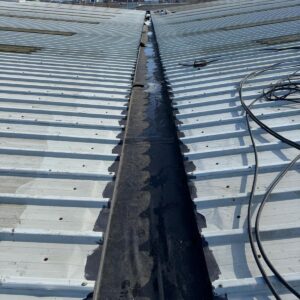
A compliant gutter system is one that functions reliably under the expected weather conditions – managing rainwater effectively without overflow, blockage, or structural failure. Gutters should be free of debris, correctly aligned, and connected to downpipes that allow water to drain away safely.
In more complex roof systems, such as those with internal gutters or siphonic drainage, it’s also essential that secondary drainage provisions are in place. The recently updated BS 8490:2025 standard makes this mandatory, reflecting the growing risk of intense rainfall events.
Common Pitfalls to Watch For
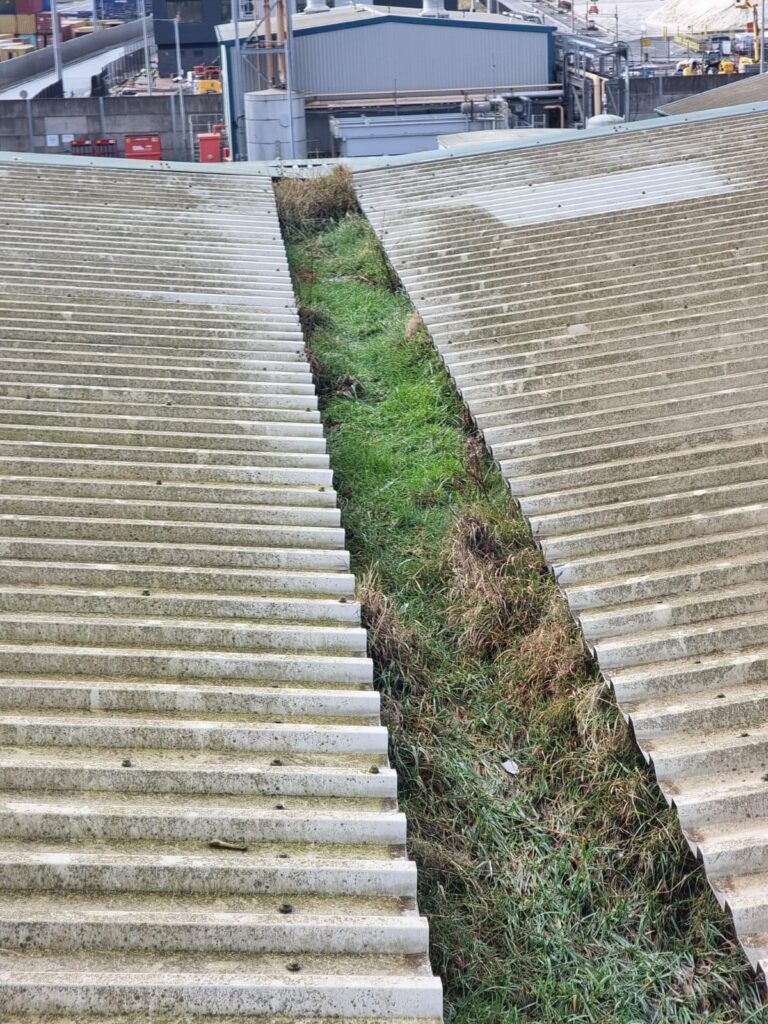
Some of the most common signs of trouble are easy to spot, but often ignored. Water overflowing during even moderate rainfall, vegetation growing in the gutters, and staining on external walls all indicate that action is needed. If water is pooling at ground level or dripping from joints, there’s a high chance your drainage system is already underperforming.
What’s often missed is the role gutter fixings and brackets play. If they become loose or corroded, the entire system can sag, causing water to back up and overflow in the wrong direction.
How RPMG Can Help Keep You Compliant
At RPMG, we provide a complete service to ensure your commercial gutter systems are not only functioning, but fully compliant with today’s expectations. From detailed inspections and high-level access cleaning, to minor realignment and replacement, our experienced teams work discreetly and efficiently across all property types.
We also support you with the documentation you need, including condition reports, service logs, and repair records that satisfy insurers and internal compliance audits.
Ready to get your gutters up to standard?
Contact us to arrange a site visit or talk about a preventative maintenance plan tailored to your site.