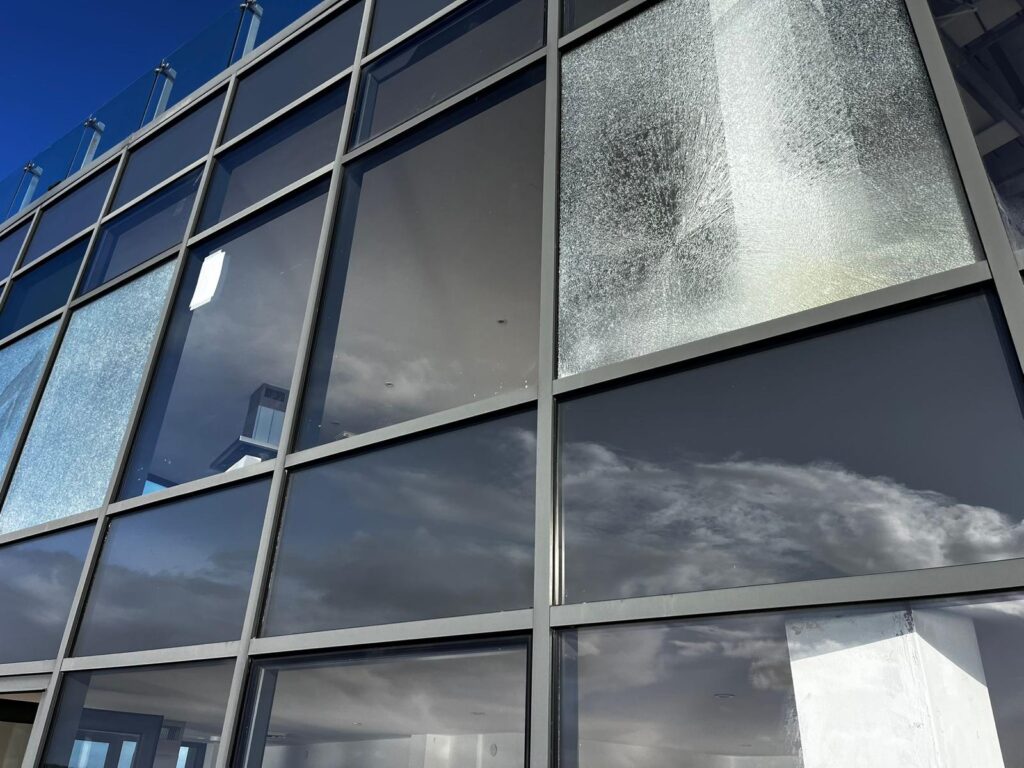

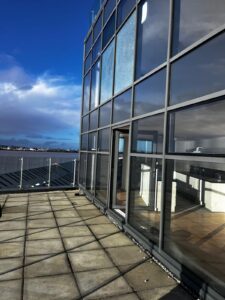

Spontaneous glass breakage is one of the most unsettling failures a building can experience. The most common technical cause in toughened safety glass is nickel sulphide inclusion. These microscopic particles can be trapped during manufacture and, over time, change state and expand inside the pane. The result can be a sudden shatter event, sometimes years after installation, with obvious safety, disruption and reputational consequences.
The risk sits primarily with thermally toughened glass. When inclusions are present, the slow phase change of nickel sulphide can create internal stress that exceeds the glass capacity, leading to failure without warning. Locations above people or assets amplify the consequence, particularly rooflights, canopies, atrium glazing and full-height façades in circulation areas. Industry guidance recognises the phenomenon and sets out mitigation, specification and risk-assessment approaches for building applications
One well-established mitigation is to specify heat-soaked thermally toughened safety glass to BS EN 14179 in critical locations. Heat soaking puts toughened panes through a controlled thermal cycle designed to provoke failure of panes that contain a critical inclusion before they reach site. This reduces the statistical risk, but does not reduce it to zero, so specification and record-keeping still matter.
For areas with higher consequence of failure, dutyholders often combine measures. Options include using laminated make-ups to ensure retention if a toughened lite breaks, or selecting heat-strengthened plus laminate where permissible to avoid the spontaneous breakage mechanism associated with fully toughened glass. The correct choice depends on location, barriers, access, thermal load and code obligations. Independent guidance from industry bodies discusses risk-based specification and the role of heat soaking in overall strategy.
If you specify heat-soaked product, keep the heat-soak certificates and batch records with your O&M file. Auditors and incident reviews will look for this evidence. Specialist safety bodies also recommend validating process controls at the processor where exposure is significant.
RPMG delivers a complete, contractor-led service around nickel sulphide risk:
Survey and triage of existing rooflights and façade zones to identify consequence categories and high-exposure areas.
Specification support that aligns products with duty of care, from heat-soaked toughened to laminated and containment strategies, referencing EN standards and manufacturer parameters.
Replacement planning and delivery, phased to minimise disruption to tenants and operations
Documentation you can rely on, including product certifications, heat-soak records where applicable, and photographic QA.
Drone inspections to map glazing fields quickly and safely, giving you high-resolution imagery for condition and access planning without putting people at height.
If you have overhead toughened glazing in public routes, if spontaneous breakage has occurred on site, or if legacy products were installed without heat-soak or retention measures, it is time for a structured review. We will assess what is in place, recommend practical options, and implement the upgrades with full compliance documentation.